
For the inner pane of a roof lantern, laminated glass is the safer choice because it stays in one piece if it breaks, and the Rooflight Association now recommends it as the first choice for overhead glazing. Toughened glass is still widely used and is often the outer pane, but a toughened inner pane can shatter and fall into the room below.
What is the difference between laminated and toughened glass?
Toughened glass is heat-treated to make it several times stronger than ordinary glass and to break into small, blunt pieces; laminated glass is two or more sheets bonded with a plastic interlayer that holds the fragments in place when it breaks. Both are safety glasses, but they protect people in different ways:
| Toughened | Laminated | |
|---|---|---|
| How it breaks | Shatters completely into small pieces | Cracks but stays bonded to the interlayer |
| After breakage | Fragments can fall out of the frame | Pane usually stays in the frame |
| Strength | High resistance to impact and heat stress | Depends on the glass used in each layer |
| Typical position in a lantern | Outer pane | Inner pane |
Why does the inner pane matter most?
The inner pane is the one directly above people's heads. If an outer toughened pane breaks, the fragments usually land on the inner pane or on the roof. If a toughened inner pane breaks, there's nothing between it and the room. Toughened glass mostly breaks into small dice, but in overhead glazing it can also fall in clumps, which can injure people or pets below and damage floors and worktops.
What does the Rooflight Association recommend?
In January 2026 the Rooflight Association publicised its guidance that the first choice for the inner pane of a glass rooflight should always be laminated glass. It says a toughened inner pane should only be used where a rigorous risk assessment shows it adds no extra risk to people below. Its reasoning is that toughened glass can occasionally shatter without any obvious impact, usually because of tiny flaws or inclusions in the glass. The Association accepts that this is statistically unlikely, especially with heat soak tested glass, but says the risk is real. It is also lobbying for the guidance to be reflected in British Standards and in Approved Document K. This is industry guidance, not law, but it reflects current good practice.
What do British Standards already require?
According to the Rooflight Association's summary, current British Standards already require a laminated inner pane where a rooflight is more than 5 metres above floor level or above water, such as a swimming pool. In other situations they permit a toughened inner pane, subject to a satisfactory risk assessment. Most domestic lanterns over kitchens and living rooms are well under 5 m, which is why so many existing lanterns have toughened inner panes and why the Association is pressing for laminated glass in all overhead glazing.
What is spontaneous breakage?
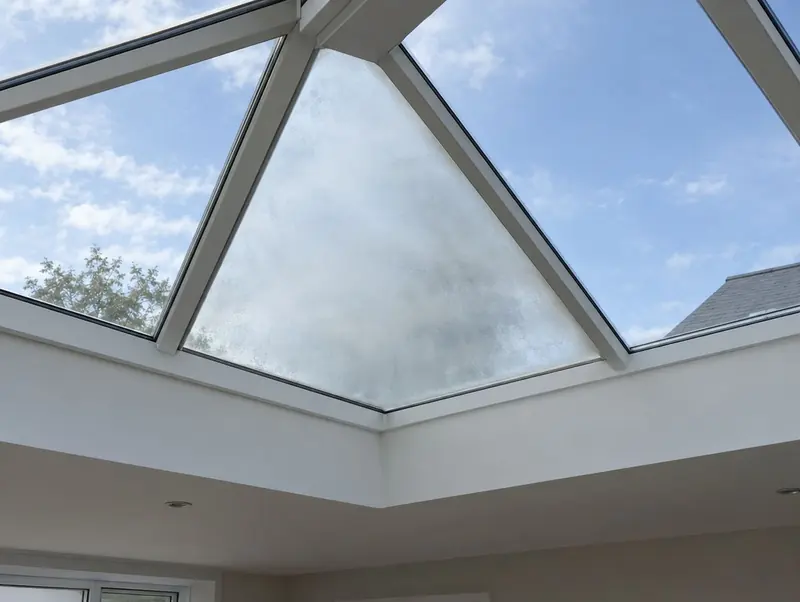
Spontaneous breakage is when a toughened pane shatters with no obvious cause, often on a warm day. It's usually traced to a microscopic inclusion that expands over time and triggers failure in the stressed glass. Heat soak testing deliberately heats toughened glass to make flawed panes break in the factory rather than in your roof, and it greatly reduces the risk. If an inner pane has a crack but the room has no glass on the floor, it's most likely laminated and holding together; see cracked glass replacement.
Should existing toughened inner panes be replaced?
There's no general legal requirement to change sound existing glass. It's a judgement for each owner, weighing the room's use, the lantern's height and size, and any history of breakage. Where you're replacing a unit anyway, because it has misted, cracked or you're upgrading to solar control glass, specifying a laminated inner pane costs relatively little extra and brings it into line with current guidance. For lanterns over pools, stairwells or double-height spaces, we'd always recommend checking the glass specification.
How can you tell what glass you have?
Toughened glass usually carries a small permanent mark in one corner, often naming the standard it was made to. Laminated glass is harder to spot from below, but sometimes the edge of the unit or the paperwork from installation shows the build-up, for example 6.4 mm laminated inner, a cavity, and 6 mm toughened outer. If you can't tell, we can check from the edge of the unit with a capping removed, or work it out from the original order.
What does a laminated replacement unit cost?
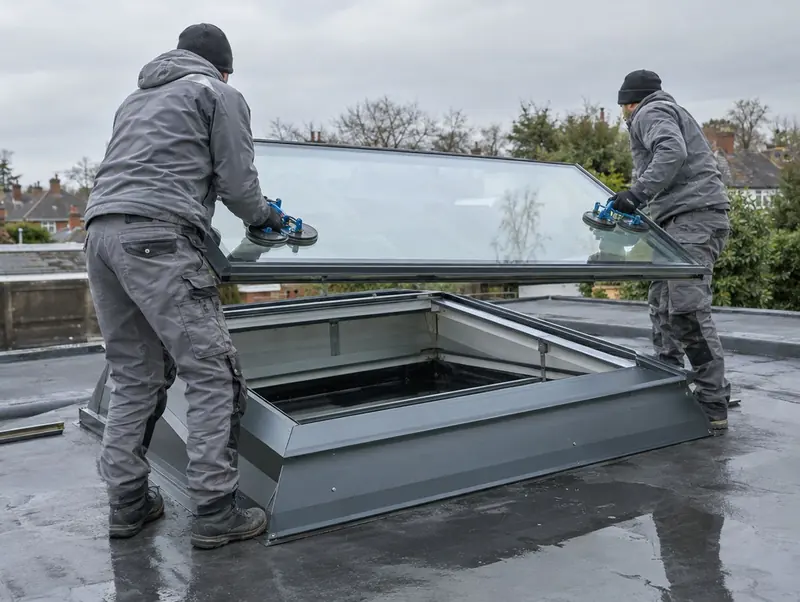
As a guide, replacement glass units cost £245–£595 ex VAT per unit and cracked units £295–£795 ex VAT per unit, depending on size and specification, and laminated inner panes fall within these ranges. Send photos for a free guide price, or try our guide-price tool; the fixed price is confirmed in writing before any work starts.
Quick answers
Is laminated glass a legal requirement in a domestic roof lantern?
Not generally for lanterns under 5 m above the floor, although the Rooflight Association recommends it as the first choice. British Standards already require it above 5 m or over water.
Is laminated glass weaker than toughened glass?
Ordinary laminated glass is less resistant to impact and heat stress than a single toughened pane, but it holds together when it breaks. Laminated glass can also be made from toughened or heat-strengthened sheets to combine both benefits.
Does laminated glass make my roof lantern safe to walk on?
No. A laminated inner pane reduces the risk of glass falling into the room but doesn't make a lantern non-fragile. Nobody should stand or kneel on a roof lantern.
Sources
- Rooflight Association promotes laminated glass as first choice for safety in overhead glazing – The Rooflight Association
- Glass Rooflight Information – The Rooflight Association
- Specification Guide for Glass Rooflights – Document NTD14 – The Rooflight Association
Written by the Roof Lantern Repairs team. Last updated 19 October 2026.