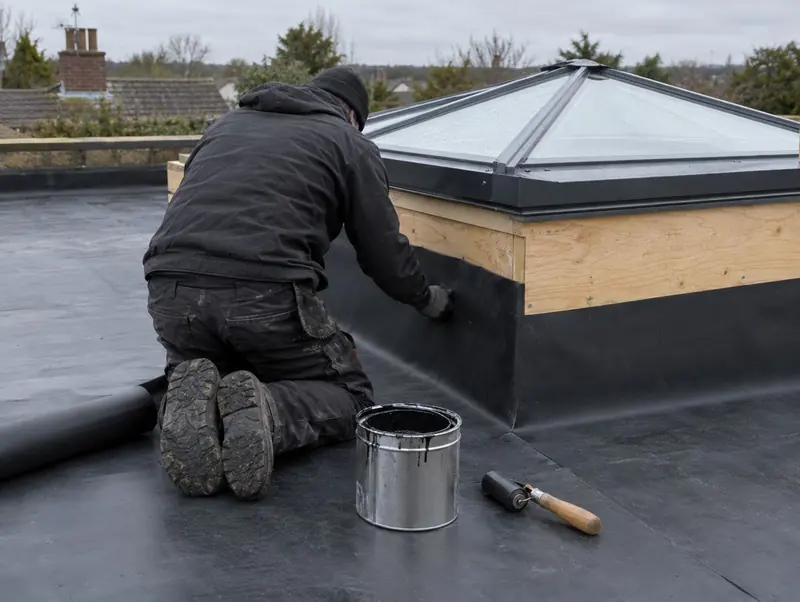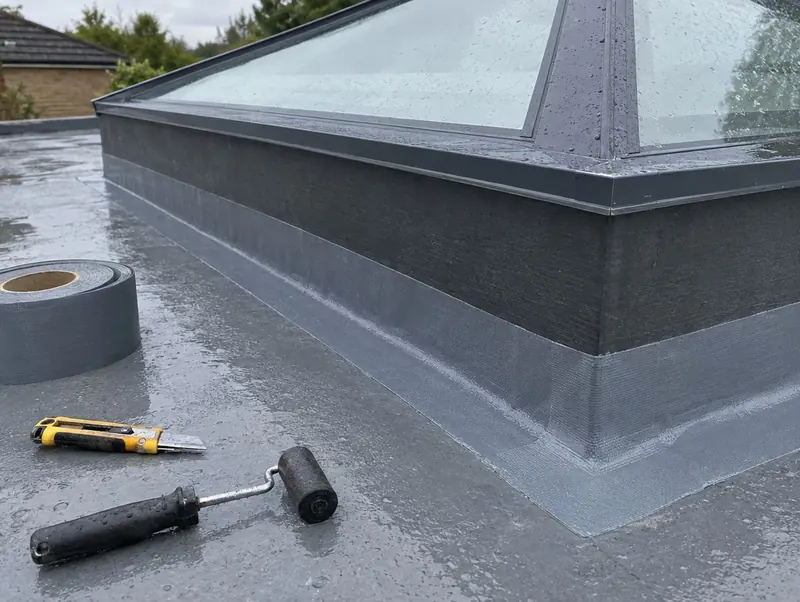
We're repair-first, but some lanterns are past it: distorted frames, rot through the main bars, or most of the glass failed. Then a new lantern is better value. We replace the lantern, check or rebuild the kerb, and re-make the roof junction.
What are the signs you need roof lantern replacement?
- Several misted or cracked units
- Distorted or sagging frame
- Rotten timber throughout
- Repeated leaks after previous repairs
- Single-glazed or very poor thermal performance
What usually causes it?
Age
Older lanterns can't be brought up to modern performance with repairs alone.
Structural damage
Impact or movement distorts the frame.
Rot
Timber lanterns left unmaintained.
How do we fix it?
- Compare honestlyYou get a repair price and a replacement price where both are realistic.
- SpecifySize, glass, colour and vents; laminated inner panes; kerb details.
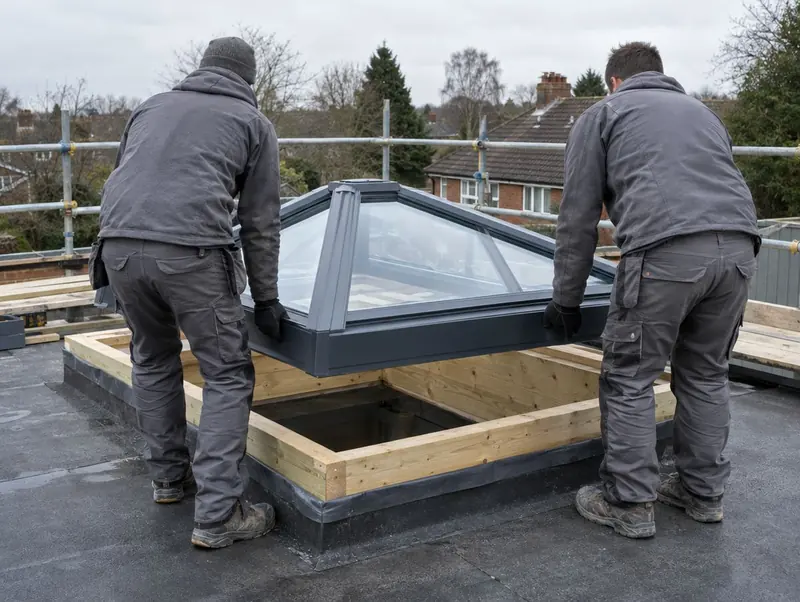
- InstallOld lantern out, kerb checked or rebuilt, new lantern in, junction re-made.
Do I need building regulations approval for a new lantern?
It depends on where you are and the work. In England, a replacement rooflight is generally treated like a replacement window: it's done by an installer registered with a competent person scheme, or with a building regulations application, and enlarging the opening always needs an application. Wales, Scotland and Northern Ireland have their own rules. We confirm in writing which route applies before any replacement. See our building regulations guide.
What should you expect to pay for roof lantern replacement?
Guide prices assume a standard lantern on a single-storey roof with safe ladder access. Where a tower or scaffold is needed we add it to the quote (typically £245–£895 ex VAT). Diagnostic visits start from £145 ex VAT. Your fixed price is confirmed in writing before any work starts. See all guide prices.
Do you need permission for this work?
Straightforward repairs don't normally need building regulations approval or planning permission. Replacing a whole lantern, changing its size or working on a listed building is different, and the rules vary by nation:
England
In England, replacing a roof lantern or rooflight is generally treated like replacing a window: the work must meet the Building Regulations (energy efficiency under Approved Document L, and safety glazing), and it's either done by an installer registered with a competent person scheme or notified to building control with an application. Enlarging the opening always needs a building regulations application. Replacing only the sealed glass units in an existing frame is usually treated as a repair rather than notifiable work, but the new glass should be no worse than before — if you're unsure, check with building control. We confirm in writing which route applies before any replacement.
Listed buildings need listed building consent from the local council for alterations, and conservation areas can have extra controls; like-for-like repairs are treated differently from changes, so check with the council's conservation officer first.
Wales
In Wales, building regulations are devolved and the Welsh Government publishes its own Approved Documents. Installing a new rooflight generally needs approval; for a replacement, the Welsh Government suggests using an installer registered with the relevant competent person scheme, or otherwise involving building control, and the new lantern must meet the Welsh energy-efficiency requirements. We confirm in writing which route applies before any replacement.
Listed buildings in Wales need listed building consent from the local planning authority for alterations, with Cadw guidance on historic buildings; check with the council before changing a lantern on a listed property.
Scotland
In Scotland, the Building (Scotland) Regulations 2004 and the Technical Handbooks apply. Under schedule 3, replacing a rooflight including its frame doesn't need a building warrant but must meet the building standards in full; other work to a rooflight, including reglazing, must leave it no worse than before. New or enlarged openings are different and normally need a warrant. We confirm in writing which applies before any replacement.
Listed buildings in Scotland need listed building consent from the planning authority for alterations, with Historic Environment Scotland guidance; check before changing a lantern on a listed property.
Northern Ireland
In Northern Ireland, the Building Regulations (Northern Ireland) 2012 and the Technical Booklets apply, administered by your council's Building Control service. Replacement glazing, including rooflights, must meet the energy-efficiency requirements, and an application may be needed depending on the work. We check with Building Control and confirm in writing which route applies before any replacement.
Listed buildings in Northern Ireland need listed building consent from the council for alterations; check with the council's planning service before changing a lantern on a listed property.
Questions about roof lantern replacement
How much does a replacement roof lantern cost?
Standard sizes typically £1,995–£4,995 ex VAT supplied and fitted; bespoke sizes and kerb rebuilds are priced on survey. You get the fixed price in writing first.
Can the new lantern use the existing opening?
Usually, if the kerb is sound and the size suits a standard or made-to-measure lantern.
Will you tell me if repair is enough?
Yes. We'd rather do a repair that works than sell a lantern you don't need.
Where do we carry out roof lantern replacement?
We cover the whole of the UK. Choose your area for local details and towns we cover.
England
- Bedfordshire
- Berkshire
- Bristol
- Buckinghamshire
- Cambridgeshire
- Cheshire
- Cornwall
- Cumbria
- Derbyshire
- Devon
- Dorset
- County Durham
- East Riding of Yorkshire
- East Sussex
- Essex
- Gloucestershire
- Greater London
- Greater Manchester
- Hampshire
- Herefordshire
- Hertfordshire
- Isle of Wight
- Kent
- Lancashire
- Leicestershire
- Lincolnshire
- Merseyside
- Norfolk
- North Yorkshire
- Northamptonshire
- Northumberland
- Nottinghamshire
- Oxfordshire
- Rutland
- Shropshire
- Somerset
- South Yorkshire
- Staffordshire
- Suffolk
- Surrey
- Tyne and Wear
- Warwickshire
- West Midlands
- West Sussex
- West Yorkshire
- Wiltshire
- Worcestershire
Wales
Scotland
- Aberdeen and Aberdeenshire
- Highlands and Islands
- Moray
- Dundee and Angus
- Perth and Kinross
- Fife
- Edinburgh and the Lothians
- Glasgow and Clyde
- Lanarkshire
- Ayrshire
- Stirling and Falkirk
- Dumfries and Galloway
- Scottish Borders
- Argyll and Bute