
If your roof lantern leaks in a storm, stay off the roof and deal with it from inside: catch and contain the water, keep it away from electrics, and record where and when it's coming in. Once the weather allows safe access, a temporary make-safe can stop the water until a proper repair is done.
What should you do first?
The first thing to do is protect people, then the room, from inside the house. Never go onto the flat roof or lean a ladder against the lantern in wind or rain. Wet glass, membranes and bars are slippery, gusts can knock you off balance, and lantern glass is not designed to take a person's weight. The Health and Safety Executive describes roof work as highly dangerous even for short jobs, and in a storm the risks multiply.
What if water is near lights or sockets?
Treat water near electrics as a hazard. If water is dripping onto or near a light fitting, a ceiling speaker, sockets or appliances:
- Don't touch any switch or fitting while you're standing in water or have wet hands.
- If it's safe to reach the consumer unit with dry hands and dry feet, switch off the affected circuit, or the main switch if you're unsure which one it is.
- Leave the affected circuit off until an electrician has checked it. Don't switch it back on to test it.
- If you see sparking, smell burning or there's any doubt, keep clear and call an electrician. If the power goes off or the supply cable into the house is damaged, call the national power cut line on 105.
How can you protect the room from inside?
Catch the water, clear the area and keep people away from anything that could fall.
- Put buckets or bowls under each drip, with an old towel inside to stop splashing.
- Move furniture, rugs, electronics and anything valuable out of the way.
- Lay towels or dust sheets around the base of the opening if water is running down the walls.
- If water is pooling on a plasterboard ceiling beside the opening and making it sag, keep everyone out from beneath it.
- Keep pets and children out of the room.
- Don't try to tape or seal the glass from inside. It won't stop the water and can trap it in the frame.
What should you record?
Good notes and pictures make the repair quicker and support any insurance claim:
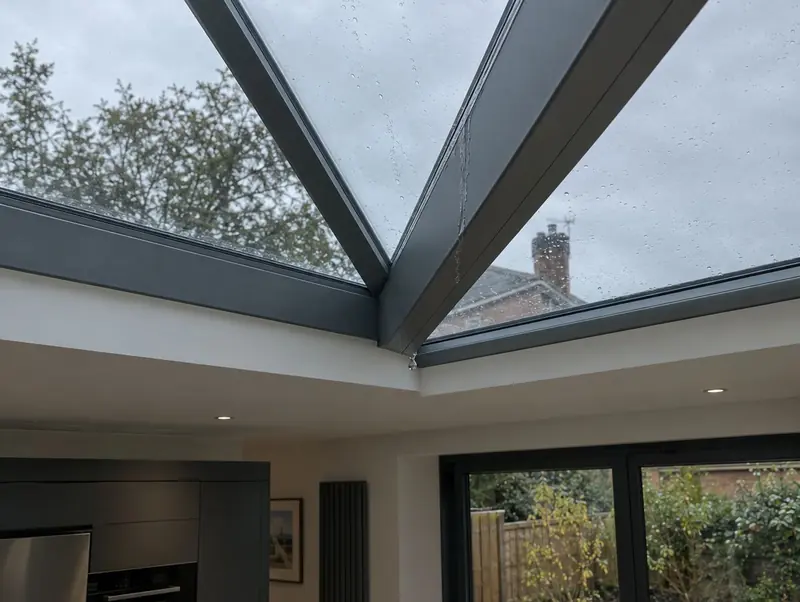
- Photos and short videos of each drip point, with the time.
- The wind direction and roughly how heavy the rain was.
- Whether it started during the heaviest rain or after it eased.
- Photos from an upstairs window or the garden showing the lantern and flat roof, if you can take them safely.
- Any damage to ceilings, floors or contents.
Patterns tied to wind direction often point to a lifted capping or seal on that side; leaks that start once water has built up on the roof suggest blocked drainage or a kerb fault.
When should you call for an urgent make-safe?
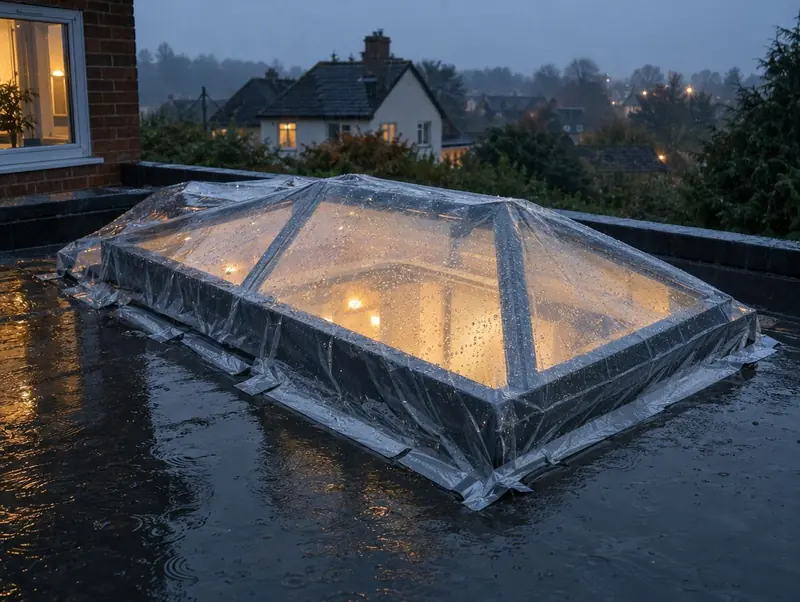
Call for an urgent make-safe if water is coming in steadily rather than as an occasional drip, if it's near electrics, if a glass panel has cracked, shifted or a capping has blown off, or if more bad weather is forecast. We arrange make-safe visits as soon as we can, once the weather allows safe access. A make-safe is temporary weatherproofing, such as sheeting, temporary seals or securing a loose capping, designed to keep water out until a full repair.
Should you check weather warnings?
Yes. The Met Office uses yellow, amber and red warnings to show how likely and how severe the impacts of wind or rain are. If an amber or red warning is in force, nobody should be working on your roof, and it's worth moving valuables away from the lantern before the weather arrives. If you know your lantern has a weakness, a yellow warning is a good prompt to get it checked once the weather clears.
What happens after the storm?
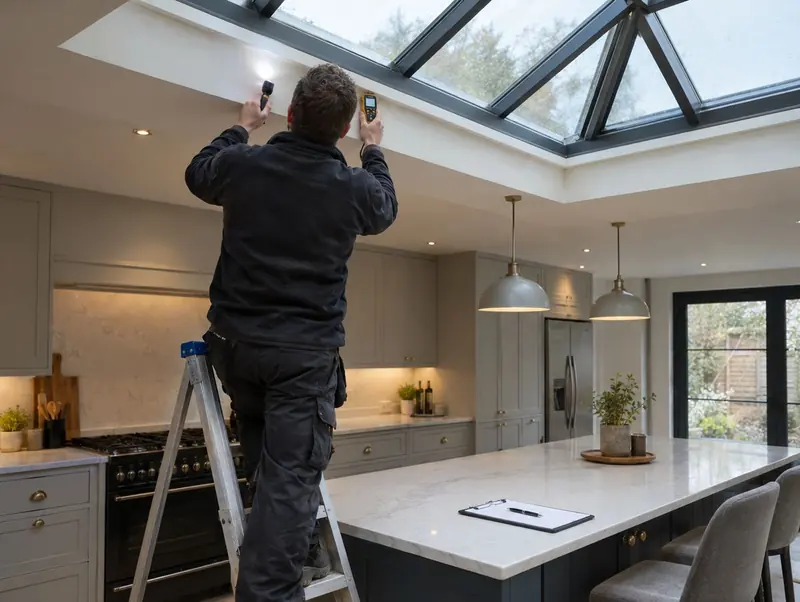
Once conditions are safe, the leak is traced and repaired properly. Many storm leaks come from lifted cappings, failed ridge seals or blocked eaves drainage, and a roof lantern leak repair typically costs £195–£595 ex VAT as a guide. An urgent make-safe visit is £195–£395 ex VAT. If the cause isn't obvious, a leak investigation from £145 ex VAT will find it. Send your photos for a free guide price, or try our guide-price tool; the fixed price is confirmed in writing before any work starts. Let your insurer know about any damage promptly, and keep receipts for emergency work.
Quick answers
Can I put a tarpaulin over my roof lantern during a storm?
Not while the storm is on. Climbing onto a wet, windy roof is dangerous and a tarpaulin acts like a sail. Contain the water inside and arrange a make-safe once it's safe to access.
Will my home insurance cover a leaking roof lantern?
Many policies cover sudden storm damage and the resulting water damage, but not wear and tear such as old seals. Check your policy and report the damage promptly with photos.
Is it safe to use the room while the lantern is leaking?
Usually, if the water is contained and kept away from electrics. Keep out from directly beneath any cracked or shifted glass and any ceiling that is sagging with water.
Sources
- Roof work – HSE
- What to do before or during a flood – GOV.UK
- Met Office weather warnings: How and why they are issued – Met Office
Written by the Roof Lantern Repairs team. Last updated 19 October 2026.