
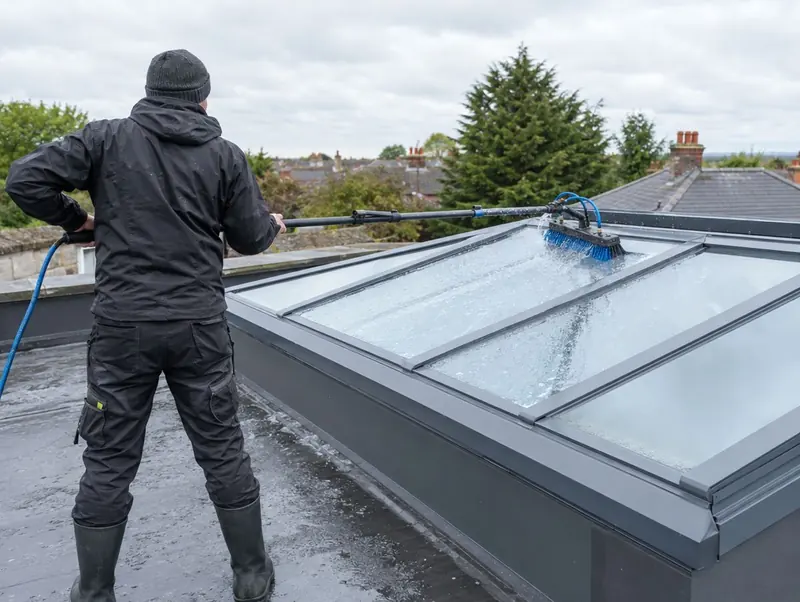
Maintaining a roof lantern means keeping its glass clean, its drainage clear and its seals, gaskets, cappings and vents in good working order. Homeowners can do the inside checks and look from the ground or a window, but cleaning and checks on the roof itself should be left to someone with the right access equipment.
Why do roof lanterns need maintenance?
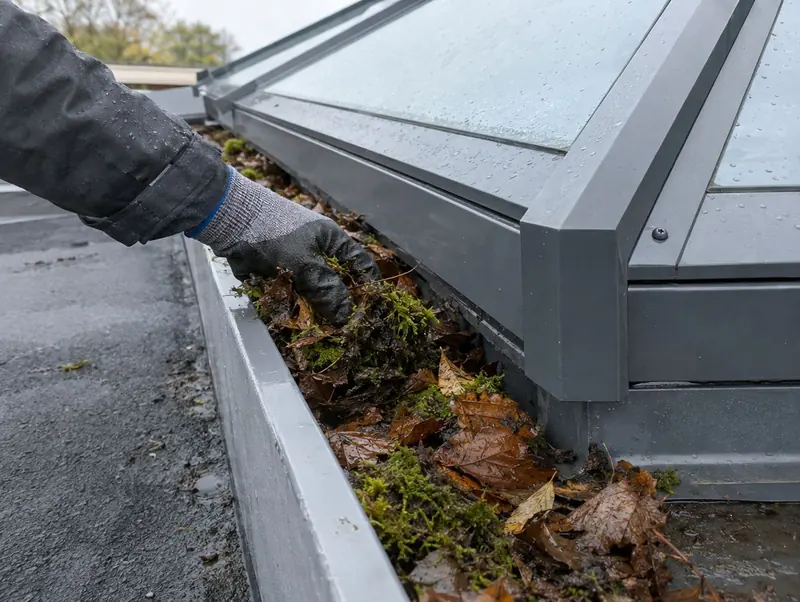
Roof lanterns need maintenance because they sit flat to the weather. Leaves, moss and grit collect in the eaves channel and at the foot of the glass, sealants and gaskets age in strong sun, and vents stiffen if they're never used. A short routine catches small faults before they become leaks, stops staining building up on the glass and keeps the drainage working.
Why shouldn't you climb onto the roof yourself?
Roof lantern glass and bars are not designed to take a person's weight, and flat roofs have unguarded edges. The Health and Safety Executive treats roof work as highly dangerous even for jobs lasting minutes, notes that fragile rooflights are a particular hazard and advises treating all roofs as fragile until a competent person has confirmed otherwise. Please don't stand, kneel or lean a ladder on a lantern, and don't use the flat roof as a platform for cleaning it. Everything in the homeowner checklist below can be done from inside, from the ground or from an upstairs window.
What can you check from inside?
Most early warning signs are visible from inside the room below the lantern.
- Look up at each glass unit for misting between the panes or white streaks that don't wipe away.
- Check the plaster around the base of the opening for damp, staining or bubbling paint.
- Look along the bars and the ridge for drip marks or tide lines.
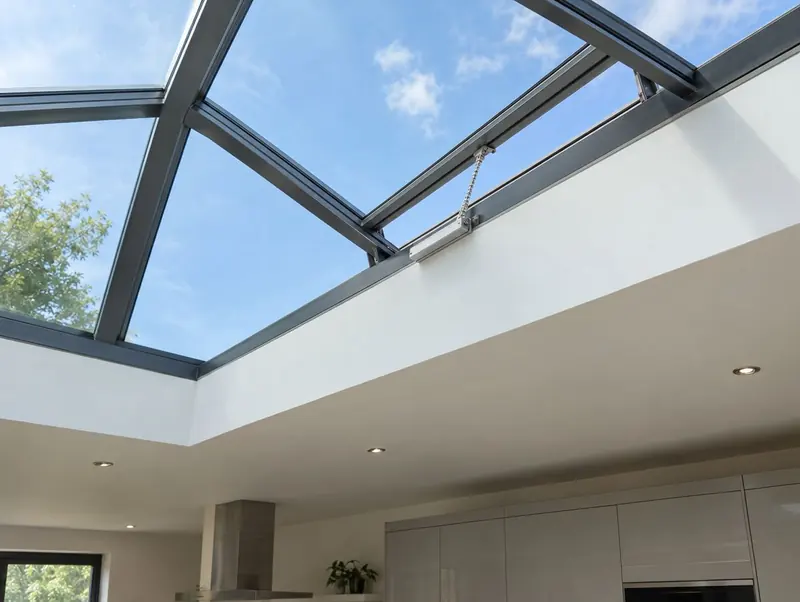
- Open and close each vent fully, listening for strain, and check the trickle vents slide freely.
- On electric vents, check the rain sensor isn't covered and the remote or wall switch works.
- Wipe condensation from the frame and keep the room ventilated, especially in winter.
What can you check from the ground or a window?
From the garden or an upstairs window you can spot most external problems without going near the roof.
- Leaves, moss or debris piled at the eaves or against the kerb.
- Cappings or end caps that look lifted, out of line or missing.
- Dark lines or growth along joints, a sign water is sitting there.
- Ponding on the flat roof next to the lantern after rain.
- Overhanging branches that drop leaves or scrape the glass in wind.
If you spot something, take a photo and send it to us. It's often enough to tell whether it needs attention.
What does a seasonal maintenance routine look like?
A seasonal routine spreads a few simple checks across the year, timed to the weather.
| Season | What to do |
|---|---|
| Spring | Check inside for winter leaks or misting; test vents before warm weather; arrange a professional clean if the glass is stained |
| Summer | Use vents and blinds to manage heat; look for sealant that has cracked or lifted in the sun |
| Autumn | Have the eaves channel, weep slots and roof outlets cleared after leaf fall; check cappings before winter winds |
| Winter | Control indoor humidity; after storms, check inside for drips and from the ground for lifted caps |
What does a professional maintenance visit include?
A roof lantern maintenance visit is done with safe access equipment and typically covers:
- Cleaning the outer glass and frame with suitable non-abrasive products.
- Clearing the eaves channel, weep slots and the flat roof outlets nearby.
- Checking every capping, end cap and gasket, and re-seating loose ones.
- Inspecting sealant joints for splits or debonding.
- Testing opening vents, actuators and rain sensors.
- A short report with photos and any repairs recommended.
Which cleaning products are safe?
Use warm water with a little mild detergent and a soft cloth or sponge on the inside. Avoid abrasive pads, scrapers and strong solvents, which can scratch coatings, damage self-cleaning glass, attack gaskets and dull powder-coated or uPVC finishes. Self-cleaning outer glass needs rain to work and shouldn't be cleaned with ordinary glass cleaner.
What should you do after a storm or heavy snow?
After severe weather, check from inside first: look for drips, damp plaster and any cracked or shifted glass. Then look from the ground or an upstairs window for lifted cappings, missing end caps and branches or debris on the roof. Snow usually slides off a pitched lantern, but where it builds up against the kerb and then melts, it can find a weak junction that rain never reaches. Don't try to sweep or knock snow off the glass. If anything looks out of place, send us photos so that we can judge whether it needs a visit before the next spell of bad weather.
How much does roof lantern maintenance cost?
As a guide, a maintenance visit costs £95–£245 ex VAT, covering cleaning, clearing drainage and checking seals and vents. Any repairs found are priced separately, for example eaves beam and gutter repair at £175–£395 ex VAT or vent repair at £195–£545 ex VAT per vent. Get a range from our guide-price tool; the fixed price is confirmed in writing before any work starts.
Quick answers
How often should a roof lantern be professionally maintained?
Once a year suits most homes, ideally in autumn after leaf fall. Lanterns under trees or on exposed sites may benefit from two visits a year.
Can I use a pressure washer on my roof lantern?
No. High-pressure water can force its way past gaskets and cappings, strip sealant and damage the glass unit edge seals.
Do electric roof lantern vents need servicing?
Yes. Running them through a full cycle regularly, keeping the rain sensor clean and having the hinges, seals and actuator checked during maintenance helps prevent them seizing.
Sources
Written by the Roof Lantern Repairs team. Last updated 19 October 2026.