
An electric roof lantern vent usually won't open or close because of a power or control problem, a rain sensor telling it to stay shut, or a worn or failed actuator, the motorised arm that moves the vent. Less often, the hinges, seals or the vent frame are binding, so the motor can't move it.
How does an electric roof lantern vent work?
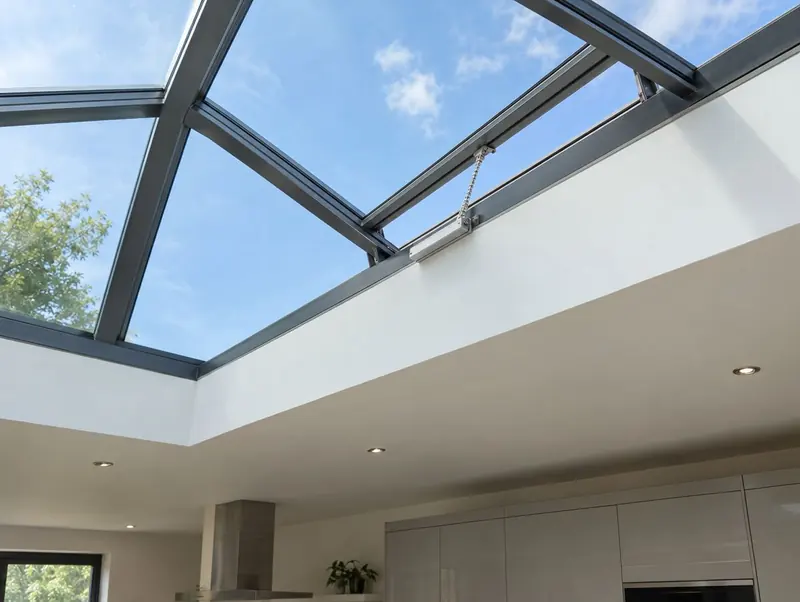
An electric roof lantern vent is a hinged glazed panel opened and closed by an actuator, usually a chain or spindle motor fixed to the frame. The actuator is powered from a mains supply through a transformer or control unit, and operated by a wall switch, remote control or smart-home system. Many vents also have a rain sensor that closes the vent automatically when it gets wet, and some include a wind or temperature sensor. Seals around the vent's frame keep the weather out when it's shut, and trickle vents may sit alongside it for background ventilation.
What simple checks can you do safely?
These checks can all be done from inside, without touching wiring or going onto the roof:
- Check the fused spur or circuit breaker supplying the vent hasn't tripped.
- Replace the batteries in the remote control and try the wall switch if there is one.
- Look for a status light on the control unit or switch; some flash a fault code.
- Wait for a dry day. If the rain sensor is wet, dirty or covered, most systems won't let the vent open.
- Check nothing is obstructing the vent from inside, such as a blind, cable or fitting.
- Listen when you press the button: a hum or click without movement tells us something different from silence.
Don't open the control unit, actuator or wiring. Any electrical fault-finding beyond these checks should be done by a qualified person.
Why won't the vent open?
Most vents that won't open have a sensor, power or control problem rather than a broken motor.
- Rain sensor – wet, dirty, covered by leaves or faulty, so the system thinks it's raining.
- No power – a tripped breaker, failed fuse, transformer or loose connection.
- Control fault – a dead remote, a paired remote that has lost its link, or a failed receiver.
- Failed actuator – the motor runs but the chain or spindle won't drive, or there's no response at all.
- Binding vent – swollen seals, a twisted frame or stiff hinges stop the actuator pushing it open, and it cuts out to protect itself.
Why won't the vent close, or why does it close and reopen?
A vent that won't close fully is a priority because it can let rain in. Common causes are an obstruction in the frame, debris on the seals, an actuator whose limit setting has drifted, a broken chain link or a vent frame that has moved out of square. A vent that closes and then pops back open often has an obstruction or a seal it can't compress, and the actuator reverses when it detects resistance. If a vent is stuck open with rain forecast, keep the room clear of anything valuable and arrange an urgent make-safe visit, which we arrange as soon as we can.
What about manual vents?
Manual vents, opened with a winding pole or handle, fail in simpler ways: a worn gearbox, a seized hinge, a broken stay or a stripped handle. They're also the vents most likely to be left shut for years and then forced. Many can be repaired with new hinges, gear mechanisms or stays, and some can be converted to electric operation with a retrofit actuator where the frame allows.
How is a faulty vent repaired?
A faulty vent is repaired by testing the cheapest likely causes first and working towards the actuator and frame.
- We check the power, controls and sensor first, because they're the most common and cheapest faults.
- We test the actuator off the vent to see whether it runs under no load.
- Hinges, seals and the vent frame are checked for binding or distortion.
- Failed parts are replaced: actuator, rain sensor, receiver, remote, hinge or seals.
- The vent is adjusted so it closes fully and evenly onto its seals, then tested through several cycles.
Actuators vary between lantern systems, so we identify the make and model before ordering parts.
How much does a vent repair cost?
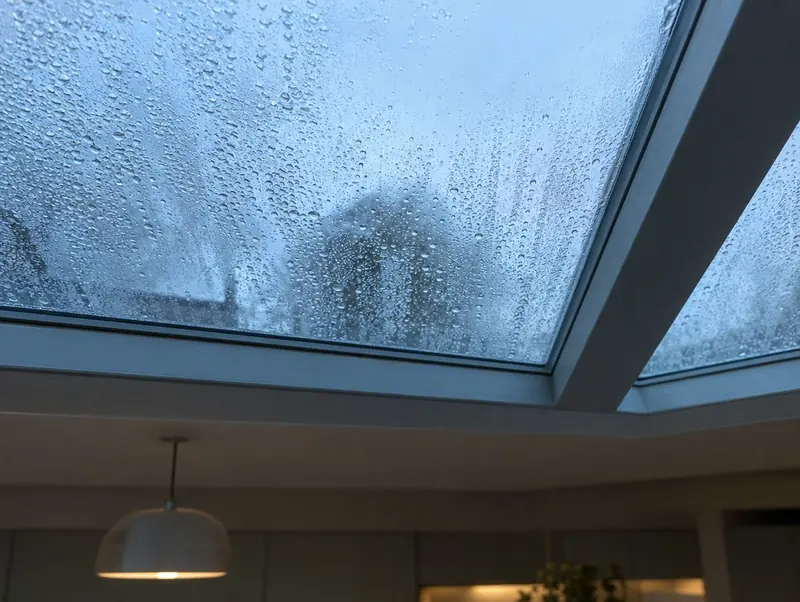
As a guide, roof lantern vent repair costs £195–£545 ex VAT per vent, depending on whether it needs an actuator, a control part, seals or a hinge. Including vent checks in a maintenance visit (£95–£245 ex VAT) helps catch problems early. A working vent also helps with condensation and summer heat. Send photos or a short video of the vent trying to move for a free guide price, or try our guide-price tool; the fixed price is confirmed in writing before any work starts.
Quick answers
Why does my roof lantern vent close on its own?
Usually the rain sensor has detected moisture, which can include heavy dew, frost or a dirty sensor. Some systems also close on a timer, in high wind or when a smart-home routine runs.
Can a different actuator be fitted to my roof lantern vent?
Often, yes, if it has the right stroke, force and fixings for the vent. We match the replacement to the vent's size and weight so it opens and seals properly.
Is it safe to leave an electric vent open overnight?
With a working rain sensor it will close if rain starts, but consider security and the forecast before leaving any vent open while you're asleep or away.
Written by the Roof Lantern Repairs team. Last updated 19 October 2026.