
Repair is usually the right choice when the frame is sound and the problem lies in the seals, gaskets, cappings, glass units or drainage, because those parts can be renewed for a fraction of the cost of a new lantern. Replacement makes more sense when the frame itself has failed, the design suits the roof badly, or repeated repairs keep chasing the same leak.
When is repairing a roof lantern the better option?
Repair is the better option whenever the frame is structurally sound, because almost every other part of a roof lantern is designed to be renewed. Gaskets, cappings, end caps, sealant, glass units, vent actuators and even sections of the eaves beam can be replaced without disturbing the structure. Typical situations where repair wins:
- A leak traced to the ridge, a capping or blocked eaves drainage.
- One or two misted or cracked glass units.
- A slipped panel that needs resetting with new setting blocks.
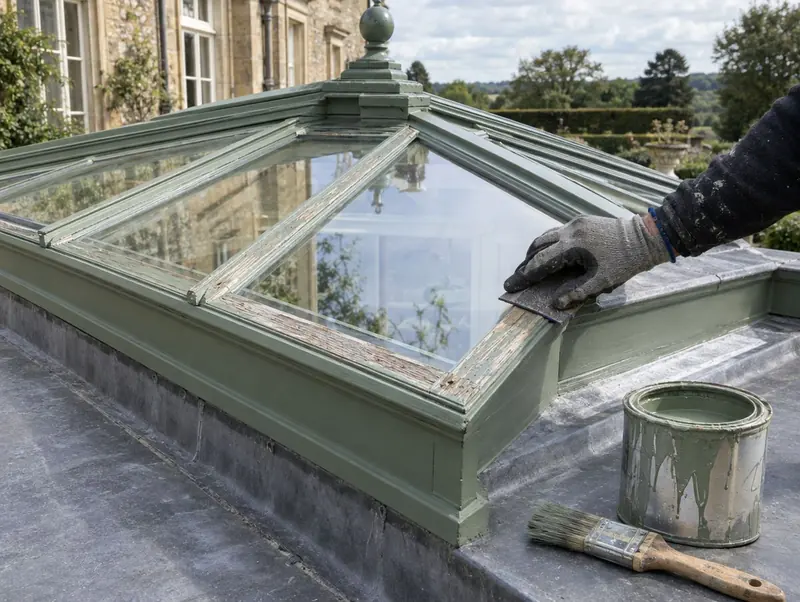
- A faded or chalky finish that can be resprayed on site.
- A vent that has stopped working.
When is replacement worth considering?
Replacement is worth considering when the problem is the lantern itself rather than its consumable parts. Signs include:
- Widespread rot in a timber lantern, especially at the feet of the rafters and along the eaves.
- A sagging ridge or spreading eaves, which can mean missing tie bars or an undersized frame.
- Most of the glass units misted at once, so the glass bill approaches the cost of a new lantern.
- Leaks that return after several competent repairs, pointing to a design or fitting fault.
- Brittle, discoloured uPVC where caps crack as soon as they're handled.
- A wish to change size, add opening vents or improve thermal performance substantially.
How do the costs compare?
As a guide, a typical leak repair costs £195–£595 ex VAT and a full reseal £245–£495 ex VAT per lantern, while a new lantern, supplied and fitted, costs £1,995–£4,995 ex VAT for standard sizes, plus any kerb work. A useful rule of thumb: if the repairs needed now add up to around half the cost of replacement and the frame is ageing, get both priced. If a single repair fixes the fault on a sound frame, repair is almost always the economic choice. For anything other than a simple job, the fixed price is confirmed in writing before any work starts, whichever route you take.
What should be checked on the frame before deciding?
A proper assessment looks past the obvious leak to the structure underneath:
- Timber – probing for soft wood at the eaves, rafter feet and ridge. Localised rot can often be cut out and spliced; see timber roof lantern repair.
- Aluminium – corrosion at cut ends and fixings, and whether the profiles are still straight.
- uPVC – whether the reinforcement is intact and the caps still clip on firmly.
- The kerb – if it needs rebuilding, the lantern has to come off anyway, which changes the sums.
Does replacing a roof lantern need building regulations approval?
Replacing a whole lantern usually counts as building work that must meet the building regulations, while repairs and glass-only swaps in a sound frame generally don't need approval. The detail differs between England, Wales, Scotland and Northern Ireland, and enlarging the opening needs approval everywhere. Our guide on building regulations for roof lantern replacement explains each nation's rules.
What if the building is listed or in a conservation area?
If the building is listed, replacing a lantern or changing its appearance or glass type is likely to need listed building consent, and carrying out unconsented work is a criminal offence in England. Repair is often the easier route here, because like-for-like repairs are less likely to need consent. Speak to your council's conservation officer before committing to a replacement.
How do disruption and energy performance compare?
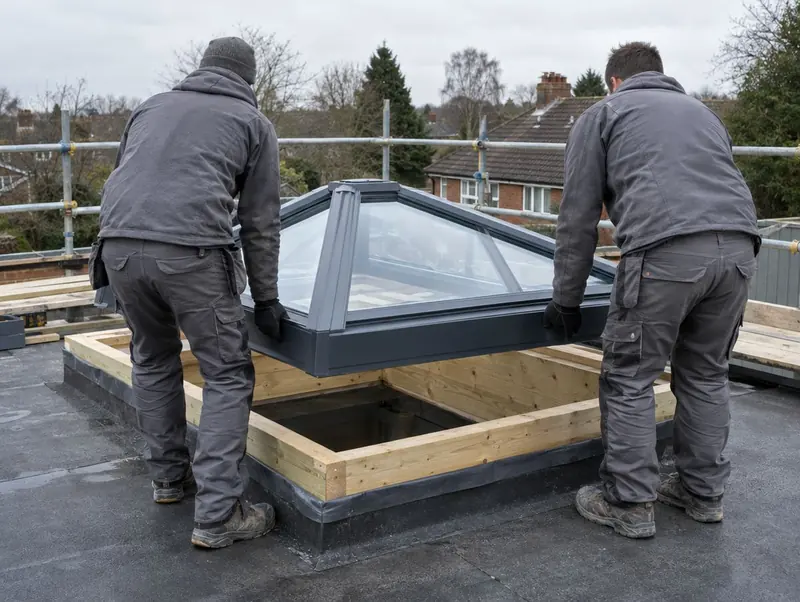
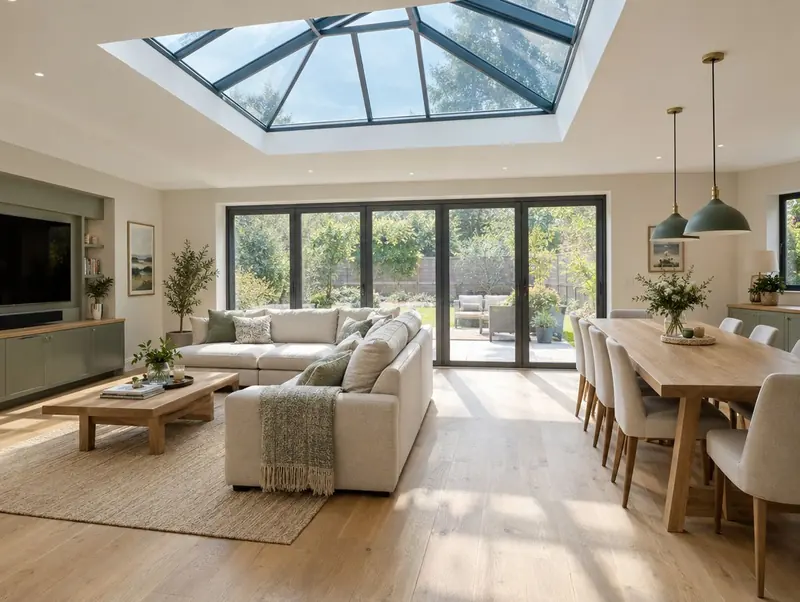
Repairs are usually done in a day or less with the room still usable, while replacement means the opening is temporarily covered, the kerb may be rebuilt and internal plaster around the base often needs making good afterwards. On energy, a new lantern with a thermally broken frame and modern glass will usually outperform an old one, but much of the gain comes from the glass. New units with a low-emissivity coating and warm-edge spacers in a sound existing frame close a good part of the gap. Where the old frame has no thermal break and condensation forms on the bars every winter, replacement offers more than glass alone.
Can you upgrade a lantern without replacing it?
Often, yes. Existing frames can usually take new glass units with a laminated inner pane, better low-emissivity coatings or solar control glass, and tired finishes can be refreshed with on-site respraying. If you do decide to replace, our roof lantern replacement service covers it. Send photos for a free guide price, or use the guide-price tool to compare both options.
Quick answers
How long should a roof lantern last?
The frame can last decades with maintenance, but sealant, gaskets and glass unit seals wear out sooner and need renewing along the way. Replacing those parts is normal upkeep, not a sign the lantern is finished.
Is it worth replacing a roof lantern just for better energy efficiency?
Sometimes, but new glass units in the existing frame often deliver much of the gain for less. A new lantern makes more sense when the frame is also poor, for example an old design without a thermal break.
Can I replace the lantern but keep the existing kerb?
Often, if the kerb is sound, the right size and properly weathered. If it's rotten, too low or poorly insulated, it's usually worth rebuilding it while the lantern is off.
Sources
Written by the Roof Lantern Repairs team. Last updated 19 October 2026.