
Resealing a roof lantern means cutting out the old, failed sealant along the ridge, hips, bars and eaves, renewing worn gaskets and cappings, clearing the drainage and applying fresh, compatible glazing sealant where the system needs it. Done properly, it's a careful strip-and-rebuild of the weatherproofing, not a new bead of silicone over the old one.
What is a roof lantern reseal?
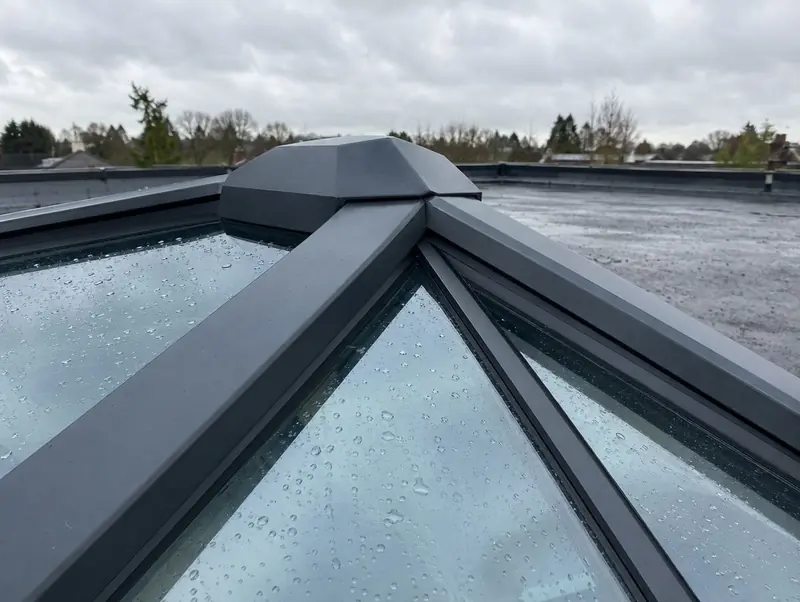
A roof lantern reseal is the renewal of every sealed joint that keeps rain out of the lantern. That covers the ridge and ridge end caps, the hip bars, the joints between glazing bar cappings and the glass, and the eaves, where the glass sits on the eaves beam and where the lantern meets the kerb. A reseal is the right job when several joints are failing at once; if only one capping has lifted, a targeted capping repair may be all you need.
What signs show a lantern needs resealing?
A lantern needs resealing when its joints show age across the whole roof, not just in one spot.
- Sealant that is cracked, split, hard, chalky or pulling away from the glass.
- Black or green growth along joints, which means water is sitting there.
- Gaskets that have shrunk back from the corners or stand proud of the glass.
- Ridge end caps with hairline cracks or open joints.
- Small leaks appearing in different places after heavy rain.
- Previous repairs where silicone has been smeared over cappings or into the eaves.
What happens during a reseal, step by step?
A proper reseal follows a set sequence, from safe access to a final check.
- Safe access. We set up ladders, roof protection or a tower so that nobody stands on the glass or bars.
- Inspection. Every capping, end cap and gasket is checked so we know what needs replacing, not just resealing.
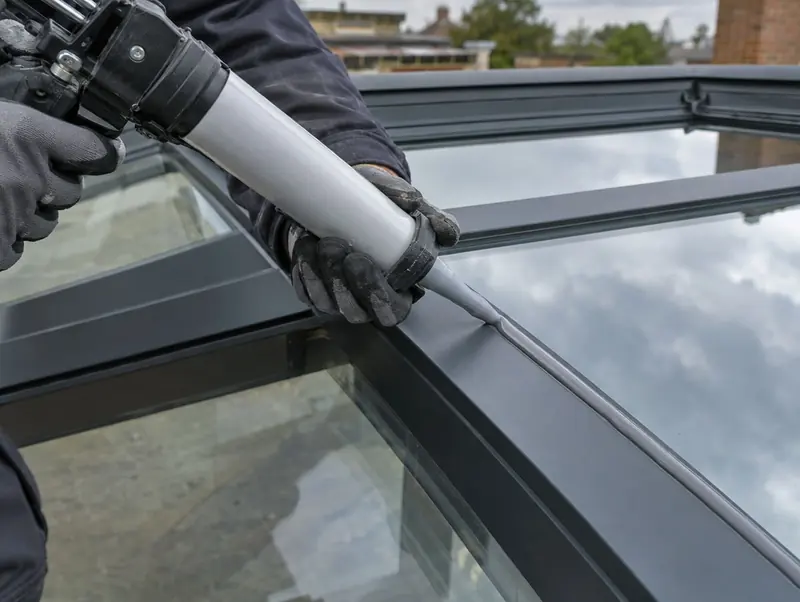
- Strip out. Old sealant is cut out completely. New sealant doesn't bond reliably to old silicone, so overlaying it is a false economy.
- Clean and prepare. Joints are cleaned back to sound glass and frame, dried, and primed where the sealant maker requires it.
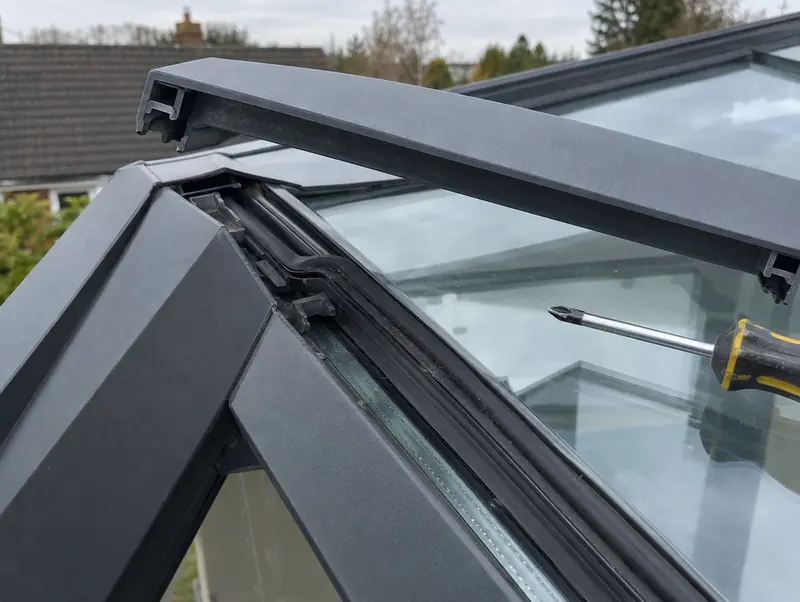
- Renew parts. Perished gaskets, cracked end caps and loose or damaged cappings are replaced or re-seated.
- Clear drainage. The eaves channel and weep slots are cleared and checked so water can escape.
- Seal. Fresh glazing sealant is applied only where the lantern's design calls for it, tooled to shed water.
- Check. Where useful, joints are water-tested before we leave.
Which sealant should be used on a roof lantern?
The sealant should be a glazing-grade product that is compatible with the glass unit edge seals, the gaskets and the frame finish, and suited to the movement the lantern goes through. Some general-purpose sealants can soften unit edge seals or stain powder-coated aluminium, which leads to misted glass or discoloured bars later. Colour matters too: a matched sealant is far less noticeable on a white or anthracite lantern. Where the manufacturer specifies a particular product or tape, we follow it.
Why is more silicone not always better?
Roof lanterns are designed as drained systems. A small amount of water is expected to get past the outer seal and run down channels inside the bars to the eaves, then out through weep slots. Sealing over those slots, filling the eaves channel or running a bead along the foot of every pane traps that water inside, where it sits against the glass unit edges and eventually finds its way into the room. Many of the worst leaks we see come from earlier over-sealing, and part of a proper reseal is removing it.
How long does a reseal take, and when can it be done?
A standard single-storey lantern is usually resealed in a day, sometimes less. Larger or orangery lanterns, or ones needing many new parts, can take longer. Sealants need dry surfaces and suitable temperatures to cure, so frost, rain and very damp mornings can push work back. If we're forced to reschedule for weather, we'll arrange a temporary make-safe if water is getting in.
How often does a roof lantern need resealing?
There's no fixed interval. Lanterns in full sun, on exposed sites or with older sealants wear faster than sheltered ones. Annual checks are the most reliable way to judge it; our maintenance checklist explains what to look for from inside and from the ground. Catching a split joint early is much cheaper than dealing with wet plaster and a soaked kerb.
How much does resealing cost?
As a guide, a full roof lantern reseal costs £245–£495 ex VAT for a standard-size, single-storey lantern with ladder access. Related work such as ridge and hip repair (£195–£445 ex VAT) or eaves beam and gutter repair (£175–£395 ex VAT) is priced separately where it's needed. Send photos for a free guide price or use the guide-price tool; the fixed price is confirmed in writing before any work starts.
Quick answers
Can I reseal a roof lantern myself?
We don't recommend it. It means working at height next to fragile glass, and DIY silicone often blocks the drainage the lantern needs to stay dry.
Will resealing stop my lantern leaking?
It fixes leaks caused by failed seals, gaskets and cappings, which are the most common causes. If the water is coming from the kerb, the flat roof or a failed glass unit, those need their own repair, which is why we inspect first.
Do the cappings have to come off to reseal a lantern?
Not always, but loose, damaged or poorly seated cappings are lifted and re-fixed during a reseal, because sealing around a capping that isn't clamping the glass properly won't last.
Written by the Roof Lantern Repairs team. Last updated 19 October 2026.