A roof lantern glass panel slips when whatever holds it at the foot of the slope, usually setting blocks and an end stop at the eaves, is missing, has failed or wasn't fitted properly, so the unit slides down between its glazing bars. It needs attention because it leaves a gap at the top for water and puts strain on the glass unit's edge.
What holds roof lantern glass in place?
Roof lantern glass is held by a combination of clamping and support. The top cappings press the glass onto gaskets along each glazing bar, while at the bottom of the slope the unit rests on setting blocks: small, hard packers that carry its weight and keep its edge out of any water in the eaves. An end stop, a clip, bracket or upturned lip at the eaves, prevents the unit sliding off the bottom. Gravity is always pulling the glass downhill, so if the blocks or stop fail, the panel creeps.
What causes a glass panel to slip?
Glass slips when the support at the foot of the slope fails or the clamping along the bars loosens.
- Missing or wrongly placed setting blocks, so the unit rests on something that compresses or moves.
- A missing, broken or bent end stop at the eaves.
- Loose or lifted cappings that no longer clamp the glass firmly.
- Thermal movement: daily expansion and contraction gradually walks a loosely held unit down the slope.
- A heavier replacement unit fitted without the right supports, for example triple glazing in a frame designed for double.
- Distorted or settled frames, where the eaves beam has moved or the ridge has dropped.
How can you tell a panel has slipped?
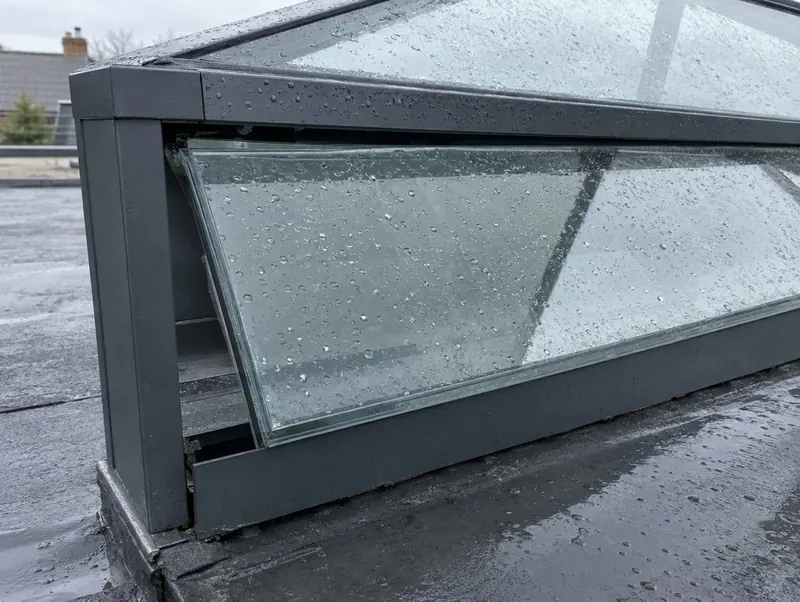
A slipped panel usually shows as a gap at the ridge end and an uneven line of glass at the eaves.
- A visible gap or line of light at the top of a pane, near the ridge.
- One pane sitting lower than its neighbours at the eaves, or overhanging the eaves beam further than the others.
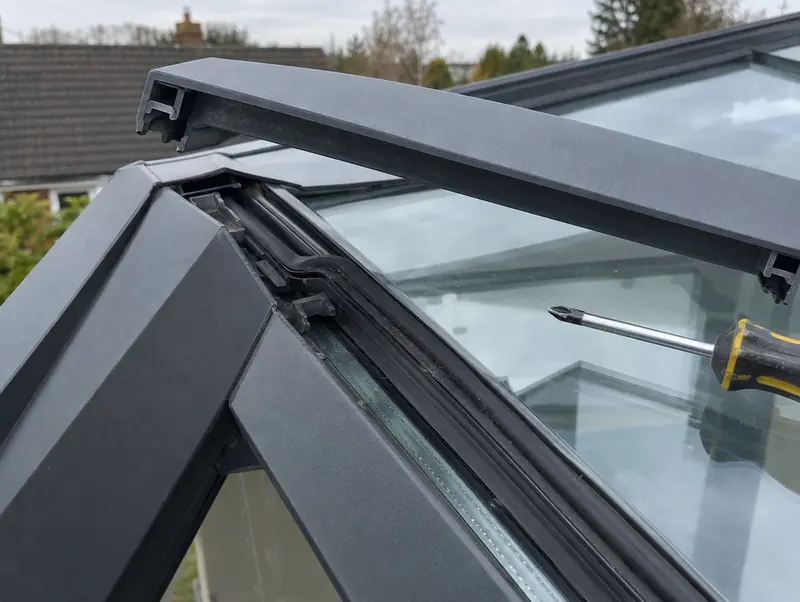
- A capping that has lifted or bowed, or a gasket that has pulled out at the top.
- A new leak near the ridge on one slope.
- Misting in a unit that has moved, because its edge seal is now under strain.
Is a slipped panel dangerous?
A slipped panel usually isn't about to fall, but it shouldn't be left. The gap at the top lets water into the ridge, the unit's edge may be bearing on metal or sitting in water, and a panel that keeps moving can eventually work free of its end stop. If a panel has moved noticeably, keep people out from directly beneath it and get it checked. If it has dropped suddenly, or the glass is cracked as well, treat it as urgent; our urgent make-safe service can secure it until the repair, and we arrange that as soon as we can.
How is a slipped panel repaired?
A slipped panel is repaired by lifting it, fixing whatever let it move and resetting it on new supports.
- Safe access is set up and the cappings on either side of the panel are removed.
- The unit is lifted, checked for damage and set aside if needed.
- The cause is found: missing blocks, failed end stop, distorted bar or debris in the eaves.
- New setting blocks are fitted in the right positions and the end stop is repaired or replaced.
- The unit is reset at the right height, with new gaskets where the old ones have shrunk.
- Cappings are refitted and secured, and the ridge, hips and eaves are resealed.
If the unit has misted or cracked, it usually makes sense to replace it at the same visit.
Does slipping affect the glass unit itself?
It can. A sealed unit is designed to sit on setting blocks so its weight is shared evenly and its edge seal stays out of water. When a unit slides, the bottom edge can end up resting on the metal of the eaves beam or in the drainage channel, and the top edge may be twisted by a capping that no longer lines up. Both put the edge seal under stress, which is why slipped panels often mist up a few months later. When we reset a panel, we inspect the unit's edges and advise whether it's worth keeping or replacing while the cappings are off.
Can slipping be prevented?
Correct setting blocks and an end stop at installation are the main defence. After that, the main prevention is keeping cappings tight and the eaves channel clear so units don't sit in water. If you replace glass, make sure the new unit's weight and thickness suit the frame. Annual checks, as set out in our maintenance checklist, pick up early movement before it causes damage.
How much does resetting a slipped panel cost?
As a guide, slipped glass panel repair costs £195–£445 ex VAT per panel, covering the reset, new packing and resealing. Where cappings need replacing, capping repair is £165–£395 ex VAT per lantern. Send photos of the panel from inside and outside for a free guide price, or try our guide-price tool; the fixed price is confirmed in writing before any work starts.
Quick answers
Can I push a slipped roof lantern panel back up myself?
No. It means working on the roof next to fragile glass, and pushing the unit back without fixing the cause means it will slip again. The cappings have to come off to reset it properly.
Why has the glass slipped in a lantern that's only a few years old?
Early slipping usually points to missing or poorly placed setting blocks or a missing end stop at installation. It's worth checking the other panels at the same time.
Will a slipped panel cause a leak?
Often, yes. The gap that opens at the ridge end lets rain into the ridge and down the bar, so slipping and leaks frequently appear together.
Written by the Roof Lantern Repairs team. Last updated 19 October 2026.