
Roof lantern condensation happens when warm, moist room air rises and meets the cooler glass and frame, which are usually the coldest surfaces in the room. It's a humidity and temperature problem rather than a leak, and it's normally solved by cutting moisture at source, improving ventilation and, where needed, warming up the glass and bars.
What causes condensation on a roof lantern?
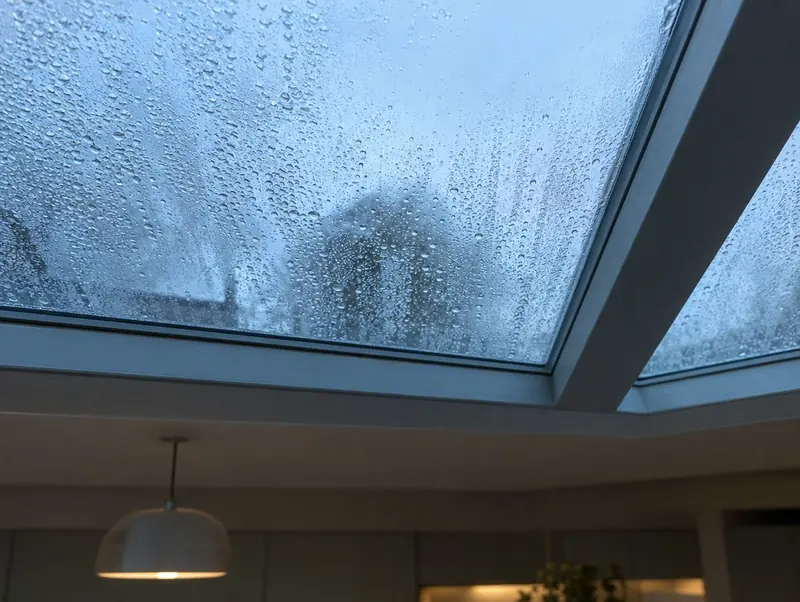
Condensation forms when air carrying water vapour touches a surface cold enough to make that vapour turn back into liquid. In a room with a roof lantern, warm air rises and collects at the highest point, which is the lantern, and the glass and bars there are colder than the walls because they face the night sky. Everyday activities supply the moisture: cooking, showering, drying laundry indoors, and simply people breathing. The more moisture in the air and the colder the lantern, the more water collects on it.
How can you tell condensation from a leak?
Condensation follows the weather inside the room; a leak follows the weather outside. Signs that point to condensation:
- Water appears on cold, clear mornings or after cooking, even during a dry spell.
- Droplets are spread across the whole underside of the glass or along every bar, not at one spot.
- It's worse in winter and when the room's doors are shut.
- The outside of the lantern is dry and the drips stop once the room warms up.
A leak usually shows in one place, during or soon after rain, and often with staining. If you're not sure, our roof lantern leak guide explains the patterns.
Why is condensation worse in some extensions?
Some rooms are almost designed to produce it:
- Kitchen extensions with a hob or range directly under the lantern and no extractor ducted outside.
- New extensions still drying out. Fresh plaster and screed release a surprising amount of water for months after the build.
- Rooms heated mainly by underfloor heating on a low setting, where the air near the ceiling stays cool.
- Sealed-up rooms where trickle vents are closed and opening vents are never used.
- Older lanterns with aluminium bars that have no thermal break, or with tired glass units, which run much colder on the room side.
What can you do day to day to reduce it?
The quickest gains come from producing less moisture in the room and letting more of it out.
- Use a cooker hood that extracts outside, and run it during cooking and for a while afterwards.
- Keep trickle vents open. Government guidance on damp and mould identifies poor ventilation as a main reason moisture builds up indoors.
- Open a roof vent or window briefly after cooking or showering to purge the damp air.
- Avoid drying laundry in the room, or use a vented or condensing dryer.
- Keep the room evenly heated rather than letting it go cold and then heating it quickly.
- In a new extension, a dehumidifier for the first winter speeds up drying.
Which repairs and upgrades reduce condensation?
Where good habits aren't enough, the fix is to make the lantern's room-side surfaces warmer or the room drier:
- Failed or old glass units replaced with modern low-emissivity units and warm-edge spacers, which keep the inner pane and its edges warmer.
- Faulty opening vents repaired so they can be used again; see roof lantern vent repair.
- Gaps and missing insulation at the kerb or eaves sealed and insulated, which removes cold spots around the base.
- Additional ventilation, such as trickle vents in the eaves or a manual or electric vent, where the lantern has none.
Our condensation fixes service starts with a diagnosis visit so that we treat the cause rather than guess.
Is it a problem if condensation drips?
Occasional light condensation is normal and harmless. Persistent dripping is worth tackling, because the water can stain plaster, soak into timber kerbs and lantern frames, encourage black mould on the reveals, and wet light fittings fitted close to the opening. Mould in particular is a health concern, and government guidance asks landlords to treat condensation damp seriously. On timber lanterns, regular condensation runoff is one of the causes of rot at the eaves.
What about moisture between the panes?
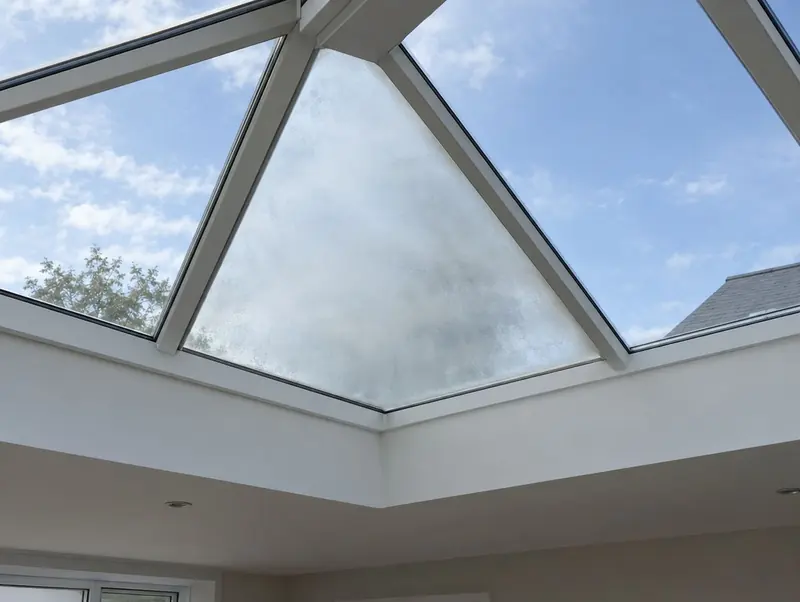
Moisture you can't wipe away from either side is inside the glass unit and means its seal has failed. That's a separate fault from room condensation and is fixed by replacing the unit. Our guide on misted roof lantern glass covers it, and condensation on the outside of the glass on a cold morning is a sign the glass is insulating well.
How much do condensation fixes cost?
As a guide, condensation fixes cost £145–£495 ex VAT, starting with a diagnosis visit and then vents, seals or glass as needed. Replacement glass units are priced separately at £245–£595 ex VAT per unit. Send photos showing where the water forms, and when, for a free guide price, or use our guide-price tool. The fixed price is confirmed in writing before any work starts.
Quick answers
Will a dehumidifier stop roof lantern condensation?
It often helps a lot, particularly in new extensions or rooms where laundry is dried. It doesn't fix cold glass or blocked ventilation, so persistent problems need the cause dealing with too.
Does triple glazing stop condensation on a roof lantern?
It raises the temperature of the inner pane, which reduces condensation on the glass, but bars, edges and the kerb can still run cold. Ventilation and moisture control matter just as much.
Why does condensation drip from the eaves of my lantern?
Water that forms on the glass runs down the slope and collects at the lowest point, which is the eaves beam. It can look like a leak there even though it formed across the whole lantern.
Sources
- Understanding and addressing the health risks of damp and mould in the home – GOV.UK
- Energy efficient windows and doors – Energy Saving Trust
Written by the Roof Lantern Repairs team. Last updated 19 October 2026.