
A roof lantern makes a room too hot because it lets in a lot of direct sunlight from overhead for much of the day, and the heat that builds up under the glass has nowhere to escape. The most effective fixes are getting hot air out through working vents and cutting solar gain with solar control glass, with blinds or films as lower-cost options.
Why does a roof lantern overheat a room?
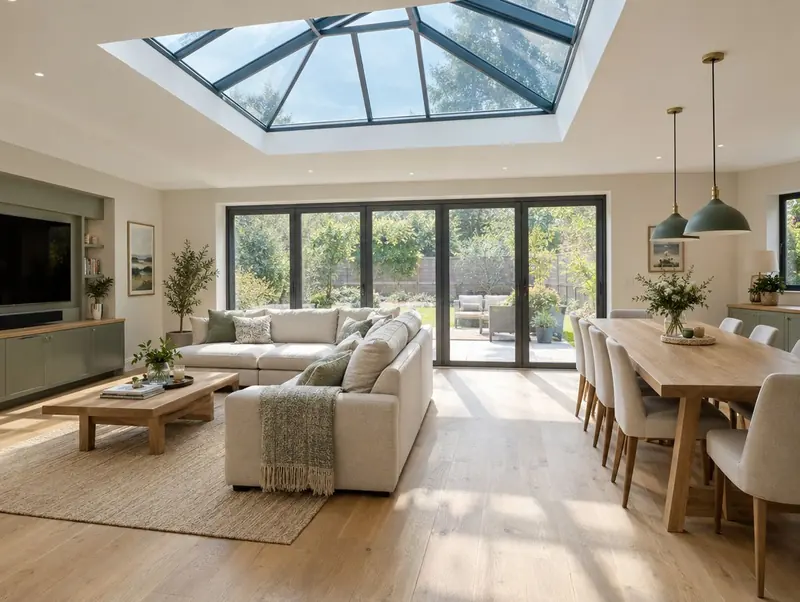
A roof lantern overheats a room because it faces the sky, so it collects sunshine for far more of the day than a vertical window, and especially when the sun is high in summer. Sunlight passing through the glass warms the floor, worktops and furniture, which then release heat into the room. Warm air rises into the lantern itself, and if there's no vent to let it out, the heat stays trapped. Standard double glazing, designed mainly to keep heat in during winter, does little to stop this solar gain coming in.
Which rooms and lanterns suffer most?
Large, south or west-facing lanterns without working vents tend to cause the most overheating.
- Lanterns on south and west-facing extensions, which get the strongest afternoon sun.
- Large lanterns relative to the floor area, such as a long lantern over a small kitchen.
- Lanterns with no opening vents, or with vents that have stopped working.
- Older glass with clear outer panes and no solar control coating.
- Rooms with dark floors and worktops that soak up heat.
- Single-aspect extensions where there's no cross-breeze from windows on the other side.
How much do working vents help?
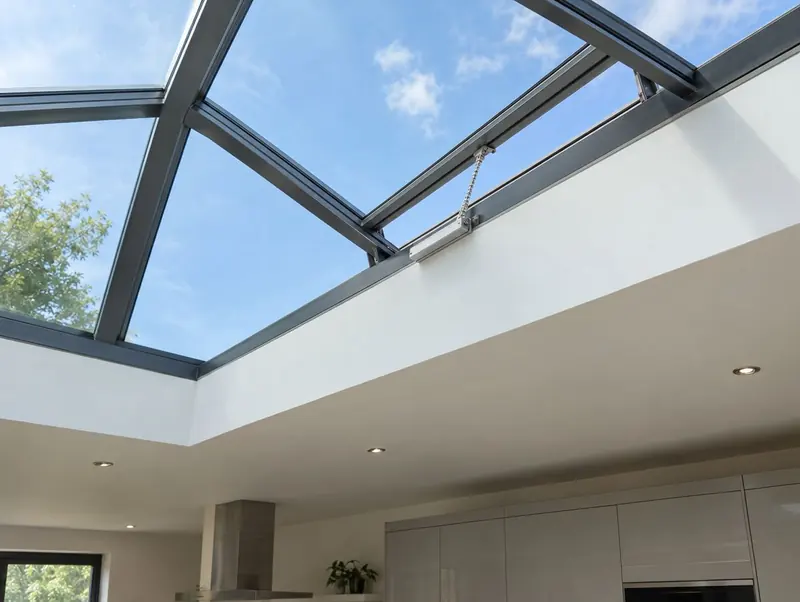
Vents make a bigger difference than many people expect. Because warm air rises into the lantern, an opening vent at the top releases it at the hottest point, and opening a door or window lower down draws cooler air in to replace it. Electric vents with a rain sensor can be left open on warm days and close themselves if a shower arrives. If your lantern has a vent that's stuck, slow or has stopped responding, roof lantern vent repair is often the cheapest way to make a hot room more comfortable. Our guide to vent faults explains common causes.
What is solar control glass, and does it work?
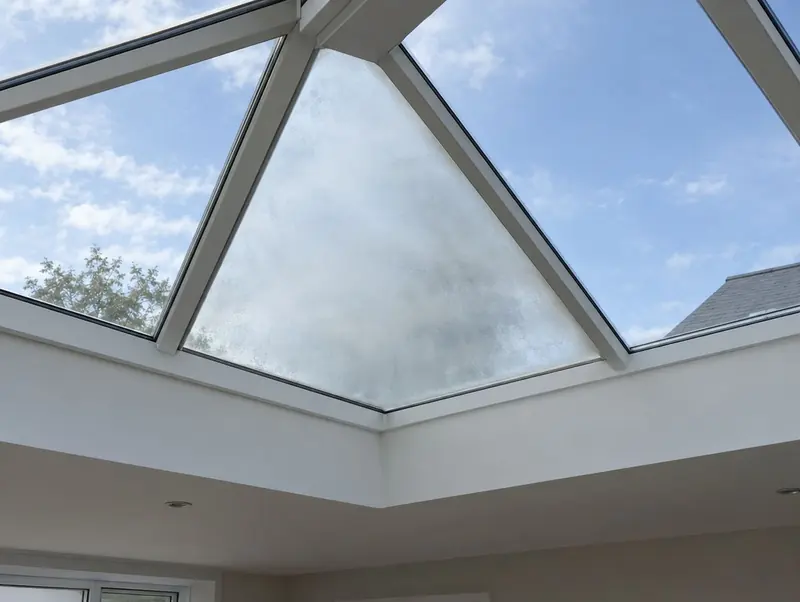
Solar control glass has a coating, or a tint, that reflects or absorbs a large share of the sun's heat while still letting most of the daylight through. Fitting it as the outer pane of new glass units can noticeably reduce how much heat enters through the lantern. Products vary in how much heat and light they block: some look nearly clear, others have a blue, grey or silver tone, and the same choice affects how bright the room feels. It can usually be fitted into the existing frame, unit by unit, so there's no need to replace the whole lantern. Solar control glass upgrades are often combined with replacing misted units.
Are blinds or window films a good alternative?
They can be, with caveats:
- Internal lantern blinds give shade and privacy, and some are motorised. Because they sit inside, the heat has already passed through the glass, so they help less with temperature than with glare.
- Applied films are cheaper than new glass, but some films can raise the temperature of the glass and stress the unit, and they may affect the glass maker's cover for the sealed unit. Always check that a film is suitable for the specific unit before applying it.
- External shading is the most effective at stopping heat, but it's rarely practical on a lantern.
How do the options compare?
Vents remove heat that has already built up, while solar control glass stops more of it getting in.
| Option | Effect on heat | Effect on light | Guide cost (ex VAT) |
|---|---|---|---|
| Repair existing vents | Good at releasing built-up heat | No change to daylight | £195–£545 per vent |
| Solar control glass units | Reduces heat coming in | Some reduction, depending on product | £345–£895 per unit |
| Internal blinds | Modest | Reduces glare and light when closed | Varies by supplier |
| Film | Modest to moderate | Some reduction | Varies; check suitability first |
Do building regulations say anything about overheating?
In England, Approved Document O sets overheating standards for new homes, but government guidance confirms it doesn't apply to extensions added later. So an existing lantern isn't required to meet it, although it's a sensible reference point if you're designing a new extension with a large lantern. Replacement glass in an existing frame is generally treated as a repair; our building regulations guide explains the rules in each UK nation.
Where should you start?
Start with the cheapest change that addresses the cause: get stuck vents working and use them. If the room is still uncomfortable, solar control glass is the most effective permanent fix. Send photos of the lantern, the room and its orientation for a free guide price, or try our guide-price tool; the fixed price is confirmed in writing before any work starts.
Quick answers
Will solar control glass make my room darker?
A little, depending on the product. Many modern solar control glasses let through most of the visible light while blocking much of the heat, and samples help you judge the tint before you choose.
Can I add an opening vent to a fixed roof lantern?
Sometimes, depending on the lantern system and its size. It usually means replacing one glass panel with a vent unit, which we can assess from photos.
Does solar control glass make the room colder in winter?
It blocks some winter sun too, but most solar control units also have a low-emissivity coating that keeps heat in, so the overall effect in winter is usually small.
Sources
Written by the Roof Lantern Repairs team. Last updated 19 October 2026.